
Blog Details
27. Digital Transformation for MSMEs_Automating Finance and Operations for Sustainable Growth
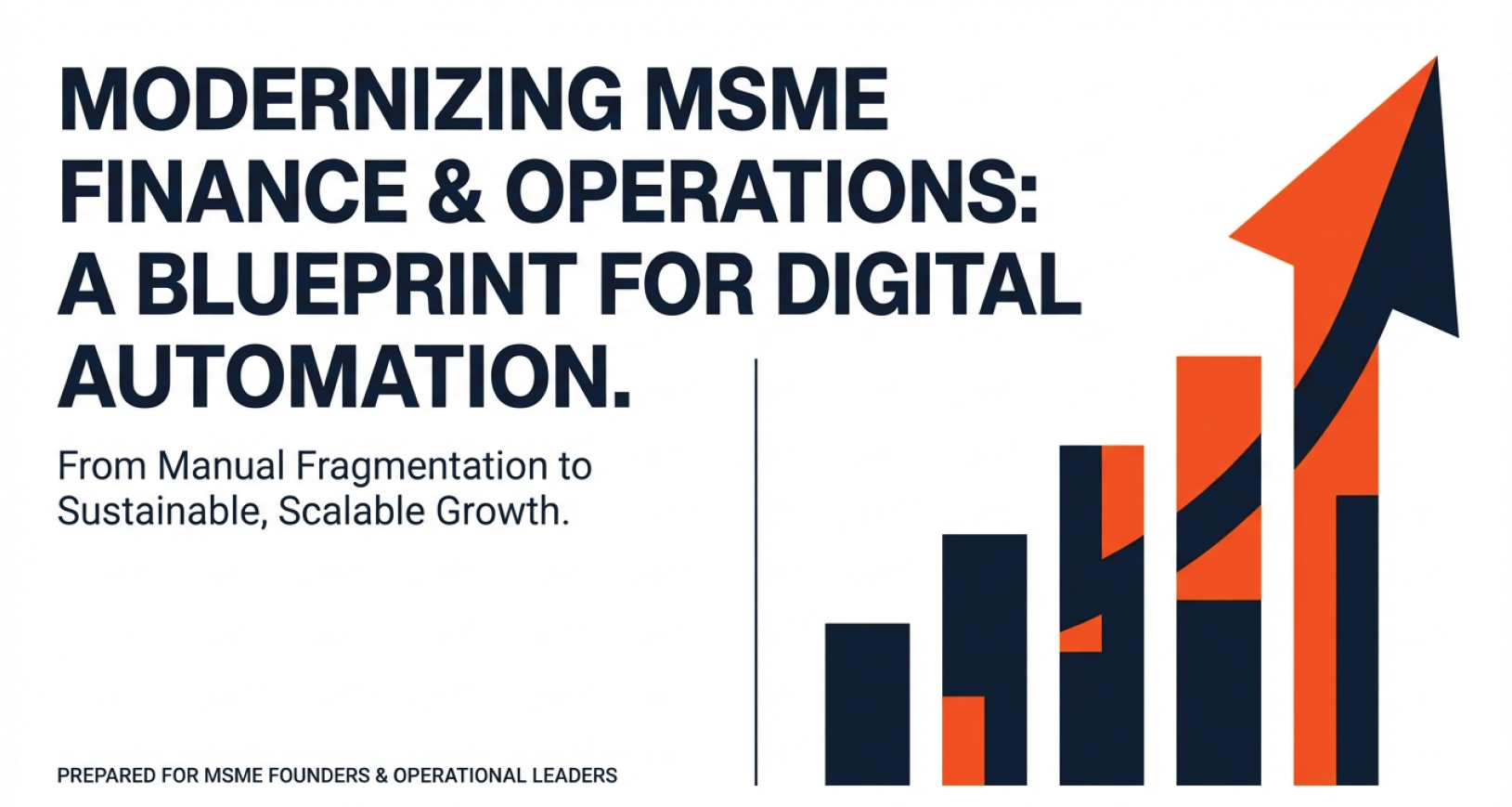
Micro, Small, and Medium Enterprises (MSMEs) form the backbone of modern economies. They drive innovation, create employment, and fuel local and global markets. Yet many MSMEs continue to rely on manual, fragmented systems that limit efficiency, increase risk, and slow growth.
Digital transformation is no longer a luxury reserved for large enterprises. For MSMEs, it is a strategic necessity. Automation in finance and operations enables businesses to operate faster, smarter, and more compliantly in an increasingly competitive environment.
This article explores how MSMEs can adopt practical automation strategies to modernize their financial and operational workflows.
Essential Strategies to Automate Finance & Operations
1. Adopt Cloud-Based Accounting Systems
Cloud accounting platforms provide real-time financial visibility while eliminating dependence on local hardware and manual records.
Solutions such as Tally Prime, QuickBooks, and Zoho Books allow MSMEs to:
- Track invoices and receivables automatically
- Manage cash flow in real time
- Perform automated bank reconciliation
- Access financial data securely from anywhere
Cloud systems also create audit-ready financial records, improving governance and investor confidence.
2. Leverage AI-Powered Bookkeeping & Compliance Tools
Artificial intelligence is reshaping financial management by automating routine accounting tasks and improving predictive insights.
AI-driven tools help MSMEs:
- Detect accounting discrepancies automatically
- Forecast cash flow based on historical trends
- Automate GST compliance tracking
- Send intelligent reminders for due payments
- Reconcile invoices with minimal manual intervention
These capabilities reduce administrative workload while improving financial accuracy and regulatory adherence.
3. Implement E-Invoicing & Digital Payment Infrastructure
E-invoicing under GST eliminates paperwork and strengthens compliance. When combined with digital payment systems such as UPI and integrated payment gateways, businesses benefit from faster collections and better liquidity management.
Key advantages include:
- Real-time invoice tracking
- Automated tax calculations
- Reduced compliance errors
- Secure, traceable transactions
- Faster payment cycles
Digital payments also enhance customer trust and operational transparency.
4. Automate Logistics & Inventory Compliance
For MSMEs involved in manufacturing or distribution — especially SKD/CKD shipments — logistics automation is critical.
Integrated systems can:
- Generate e-Way Bills automatically
- Optimize inventory levels
- Track shipments in real time
- Improve supply chain visibility
- Ensure regulatory compliance
Automation reduces delays, minimizes paperwork, and prevents costly compliance mistakes.
5. Strengthen Cybersecurity for Digital Workflows
Digital growth must be supported by strong cybersecurity practices. Financial systems contain sensitive data that must be protected against phishing, ransomware, and unauthorized access.
MSMEs should implement:
- Multi-factor authentication (MFA)
- Data encryption for financial records
- Regular security audits
- Employee cybersecurity awareness training
Secure infrastructure ensures digital transformation does not introduce new vulnerabilities.
Future-Proofing MSMEs Through Automation
Digital transformation is not merely about adopting new tools — it is about building a resilient, scalable business model. Automation creates operational discipline, financial clarity, and compliance confidence.
MSMEs that modernize finance and operations today position themselves for faster growth, improved profitability, and long-term sustainability.
The businesses that thrive in the next decade will not necessarily be the largest — they will be the most adaptable.
Automation is no longer optional. It is the foundation of competitive advantage.
Compiled by Venkadachalamurugan, Article Assistant - H M R R & Associates
Latest posts





















Copyright | All Rights Reserved H M R R & Associates