
Blog Details
32. Late Filing of ITR: Consequences and Remedies
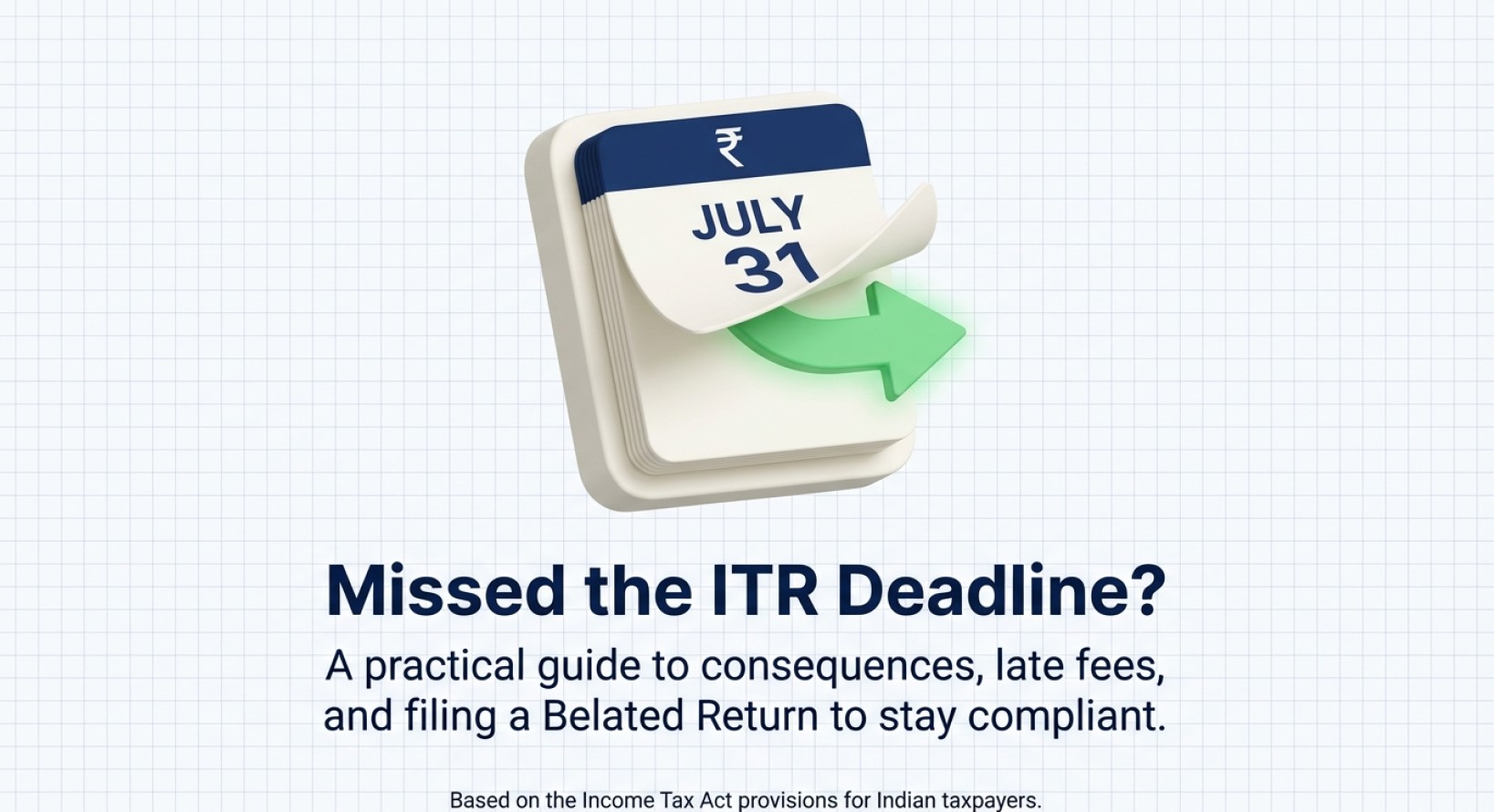
Imagine this: the ITR due date is approaching, and you confidently tell yourself, “I’ll file it tomorrow… plenty of time!”
Tomorrow turns into next week, then suddenly you realize the deadline has passed. Now panic kicks in — “Will there be a penalty? What happens now? Did I make a big mistake?”
Don’t worry — you’re not alone. Every year, many taxpayers miss the deadline due to busy schedules, missing documents, or simply forgetting. The good news is that the Income Tax Department of India understands this and provides certain provisions under the Income Tax Act to help taxpayers correct the situation.
However, late filing does come with some consequences like late fees, interest, and restrictions on certain benefits. At the same time, there are remedies available that allow you to stay compliant and avoid bigger problems later.
In this blog, we’ll break down the consequences of late filing of ITR and the remedies available, in a simple and practical way so you know exactly what to do if you miss the deadline.
1. Late Filing Fee
If you file your return after the due date, a late fee will be charged under Section 234F of the Income Tax Act.
Late Fee structure:
- Income up to ₹5,00,000 → ₹1,000
- Income above ₹5,00,000 → ₹5,000
This fee must be paid before submitting the return on the Income Tax e-Filing Portal.
2. Interest on Unpaid Tax
If there is any outstanding tax liability, interest will be charged under Section 234A of the Income Tax Act.
- Interest rate: 1% per month or part of a month
- Applicable on: Remaining unpaid tax amount
This interest is calculated from the due date of filing the return until the actual filing date.
3. Restriction on Carry Forward of Losses
When the return is filed after the due date, taxpayers lose the benefit of carrying forward certain losses such as:
- Business loss
- Capital loss
However, loss from house property can still be carried forward even if the return is filed late.
4. Delay in Receiving Tax Refund
If the taxpayer is eligible for a refund, filing the return late may delay the refund processing by the Income Tax Department of India.
In some cases, interest benefits on the refund may also be affected.
5. Assessment by the Tax Department
If a taxpayer fails to file the return entirely, the department may assess the income based on available data under Section 144 of the Income Tax Act.
In such cases, the department determines the taxable income and tax liability without the taxpayer’s input.
How to file Late (Belated) ITR Return?
If you missed the original deadline, you can file your return as a Belated Return under Section 139(4) of the Income Tax Act using the Income Tax e-Filing Portal.
Key Point to Remember
A belated return can generally be filed up to 31 December of the assessment year. Filing it earlier helps avoid additional interest and ensures faster processing by the Income Tax Department of India.
Tip: Even if you miss the deadline, it’s always better to file a belated return rather than not filing at all. This keeps you compliant and avoids future complications.
Key Takeaway
While the law allows taxpayers to file returns even after the deadline, late filing can lead to additional costs, loss of benefits, and possible scrutiny. Therefore, filing your return before the due date is always the safest and most beneficial approach.
Compiled by Mr. Venkat - Senior Audit Assistant, H M R R & Associates
Latest posts

























Copyright | All Rights Reserved H M R R & Associates